When my wife and I took a short vacation down to the Gulf Coast in October, we used part of a day to visit the Texas State Aquarium in the North Beach part of Corpus Christi. To get there, we had to take the (old) Harbor Bay Bridge that crosses a large industrial canal through which pass tankers going to the main industry of Corpus Christi, which is oil refining. That bridge was built in 1959, and about twenty years ago, plans began to be made for a new bridge. As we saw from miles away, the new Harbor Bridge is well under way and may be completed as soon as 2025.
The new bridge will be cable-stayed: two tall pylons will hold sets of cables that slant out and down to connect to the bridge deck. And I do mean tall. One of the pylons is complete, and the builders are extending the deck out from it in both directions. It is by far the tallest structure for hundreds of miles around, and the cantilevered-out parts extend so far that I got a little giddy just looking at the thing. When it's finished, the bridge will allow much taller ships to pass underneath than the current bridge, and will have a pedestrian walkway and LED lighting. Its planned cost is some $800 million, but that was before some delays occasioned in 2022 when an outside consultant raised safety concerns. That halted construction on a part of the bridge for nine months, but the five safety issues were addressed, and construction resumed last April.
Later that month, as the Corpus Christi Hooks were playing a baseball game at nearby Whataburger Field (the eponymous fast-food firm's first restaurant was in Corpus Christi), a fire began near the rear of a construction crane on the bridge. Subsequent videos obtained by news media show a load on the crane falling rapidly to the ground, and flying debris injured one spectator at the ball game. A battalion chief for the Corpus Christi Fire Department said a cable failure caused enough friction to set grease on a cable reel afire. An Internet search has not revealed any other major accidents since the bridge project formally began in 2016, but it is possible that some have escaped the news media's attention.
Originally scheduled to be completed in 2020, delays and engineering-firm changes have pushed back the anticipated completion date to 2025. That's only two years from now, and while a good bit has been accomplished, there is still much remaining.
While any injuries or fatalities from construction projects are tragic, we have come a long way from the days when it was just an accepted fact that major bridges and tunnels would cost a certain number of human lives.
In 1875, the 4.75-mile Hoosac Tunnel was completed in the hills of Western Massachusetts. It took twenty years to build, and 135 verified deaths were associated with the project. One of the worst accidents happened when a candle in the hoist building at the top of a ventilation shaft caught a naphtha-fueled lamp on fire, and the wooden hoist structure burned and collapsed down the shaft, trapping 13 workers at the bottom, who suffocated. While the hazards were severe enough to inspire a workers' strike in 1865, this failed to stop construction, and the following year saw the highest number of fatalities: fourteen.
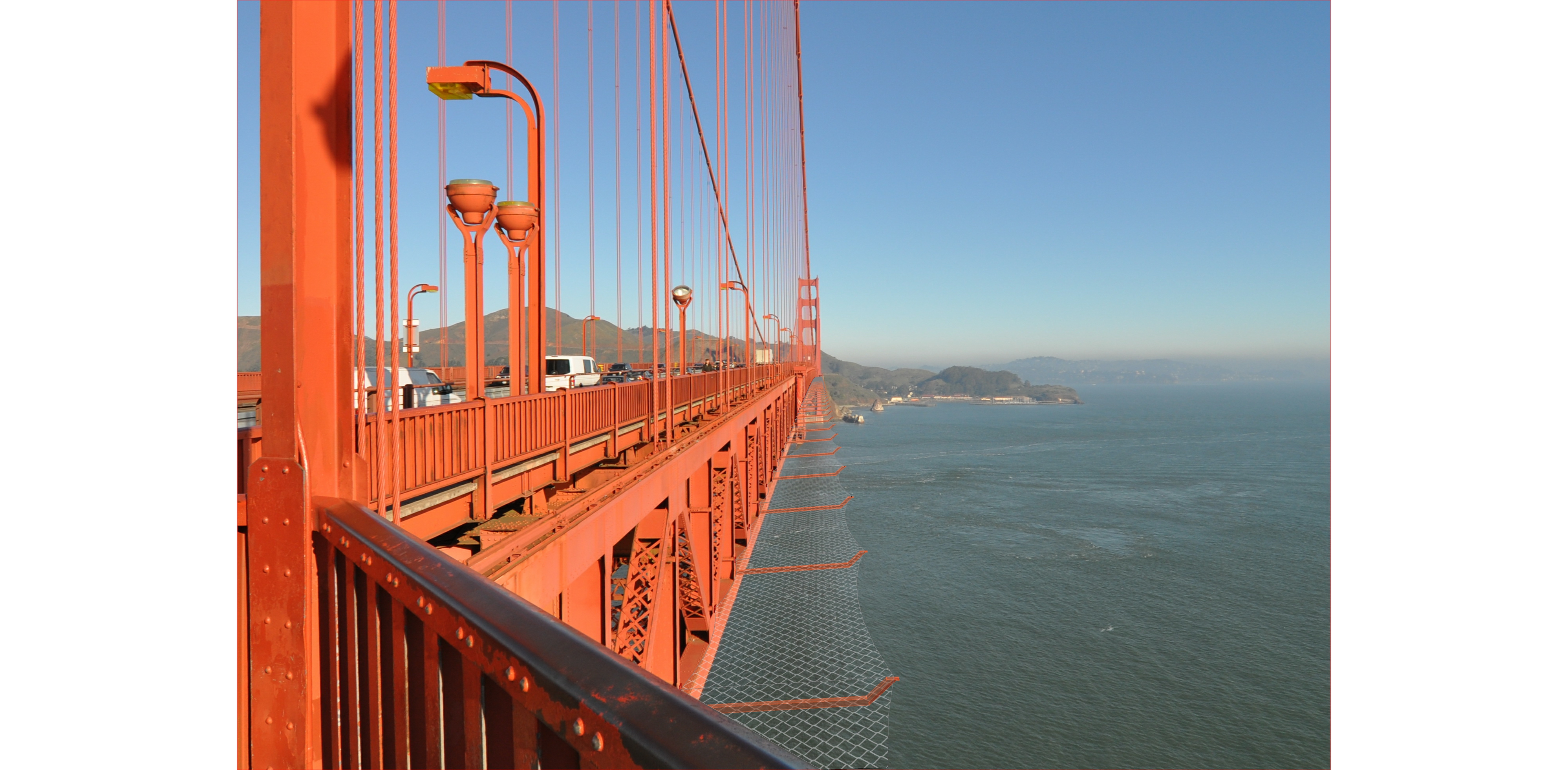
In 1937, San Francisco's Golden Gate Bridge opened after four years of work. Its safety record was better than the Hoosac Tunnel, and would have been almost perfect except for a scaffolding failure that sent twelve men plunging through the safety net to the bay. Two survived, and there was one other unrelated fatality, making a total of eleven. Nineteen men fell into the safety net and survived to form an exclusive group they called the Half Way to Hell Club.
This completely unscientific survey of major construction project fatalities and injuries seems to indicate that over time, we as a culture in the U. S. have grown less tolerant of having workers killed on the job. Credit for this improvement can be parceled out in a number of directions.
The contractors and engineers in charge of construction projects deserve a good share of the credit. They are the ones who determine how the work will be done, and how important safety is compared to the bottom-line goal of getting the job done.
The increased mechanization of construction labor has to be another factor. One modern construction worker equipped with the proper tools can do the work that required several workers decades or a century ago. So the simple fact that fewer people are needed to do a given job has made it less likely that people will be injured or killed on the job.
Government agencies—federal, state, and local—also deserve some credit. The Federal Occupational Safety and Health Administration (OSHA) was founded in 1970, and its influence has undoubtedly led to safety improvements, although doing a cost-benefit analysis of OSHA would be a daunting task even for a team of historians and safety analysts.
Labor unions hold safety as a high priority, and while there are probably statistics supporting the contention that unionized workers have better safety records than non-union employees, a lot of non-union workers manage to work safely too.
If the worst accident that happens during the construction of the new harbor bridge in Corpus Christi turns out to be the flying-debris crane mishap, that will be a truly exemplary record for a project that will have taken nearly a decade and cost nearly a billion dollars. The project still has a long way to go, and it's possible that the most hazardous operations lie in the future: putting the rest of the cables in place and connecting the deck to finish off the bridge. But the contractors have enforced safety sufficiently to get this far with no major incidents, and the hope is that this trend will continue.
The other question about the bridge is, of course, will it stay put once it's built? The original engineering firm for the bridge, FIGG, was kicked off the project in 2022 after an independent review. FIGG, by the way, was involved in the ill-fated Florida International University pedestrian bridge that collapsed in March of 2018. Recent reports indicate that all the engineering concerns have been adequately addressed, but we won't know for sure until the bridge is finished and has withstood its first hurricane. Stay tuned.
Sources: I referred to the following sources: https://www.kiiitv.com/article/news/local/new-video-port-of-cc-cameras-show-initial-fire/503-52b32589-f72c-4653-926b-2160c83fa3fd, https://www.kristv.com/news/local-news/a-crane-fire-seen-from-up-above-and-felt-from-down-below, https://www.tpr.org/news/2022-09-16/construction-on-new-corpus-christi-bridge-halted-as-engineers-say-design-flaws-could-lead-to-collapse, https://www.kiiitv.com/article/news/local/whataburger-field-spectator-hospitalized/, and https://practical.engineering/blog/2022/9/15/what-really-happened-at-the-new-harbor-bridge-project, as well as the Wikipedia articles on the Hoosac Tunnel and the Golden Gate Bridge.